Your domain portfolio
See which domains need your attention.
Keep email checks, report counts, and the next action together. Missing reports and failed checks stay visible so you know what still needs work.
See what is included →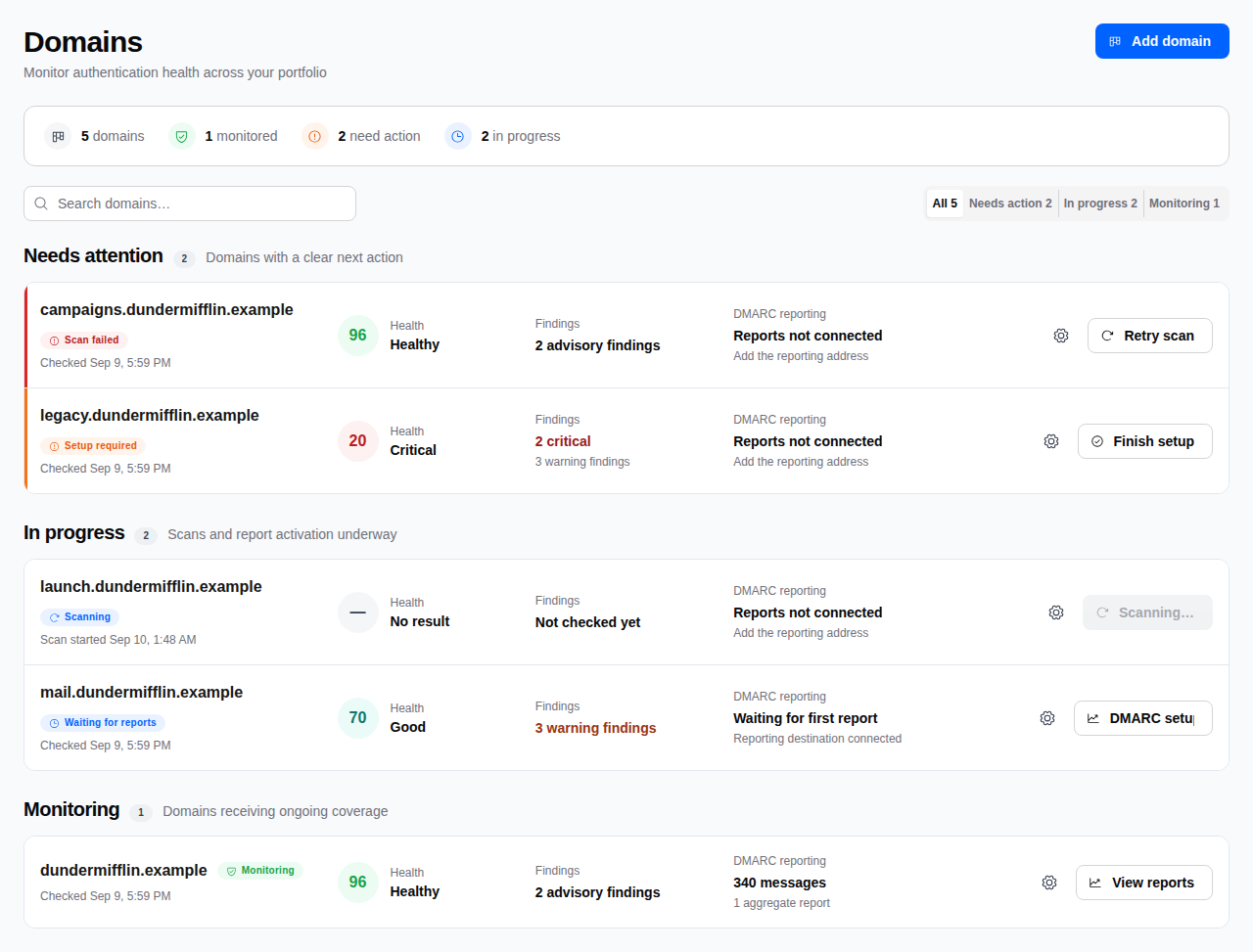
Your domain. Your reputation.
Start by checking the email settings that help protect your domain. Find missing or weak SPF and DMARC records, then monitor reported traffic with a paid plan.
Free one-off check. Ongoing monitoring is paid.
The gap in a DNS-only check
Understand your reported email traffic.
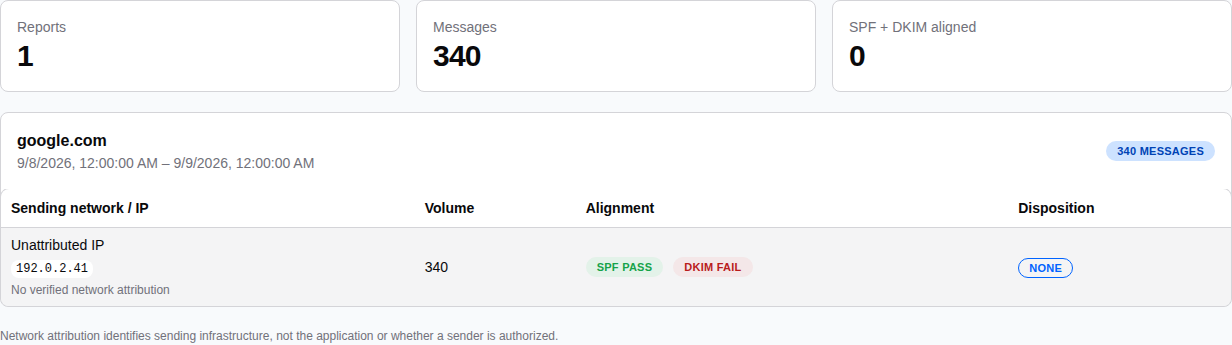
Reports from receiving mail servers show where messages came from, whether they passed DMARC, and how the receiver handled them.
See how monitoring works →How it works
Run a free scan of the email records published in your DNS.
Add your private reporting address to your DMARC record. Your policy stays the same.
Review sending IPs, message counts, and SPF and DKIM results as reports arrive.
Find missing settings and failing sources before you tighten your DMARC policy.
Keep email checks, report counts, and the next action together. Missing reports and failed checks stay visible so you know what still needs work.
See what is included →
DNS checks tell you which settings are published. DMARC reports tell you how real sending traffic is being handled. You need both to make an informed policy change.
See what is included →What settings have you published?
How is your sending traffic being handled?
Which sources or settings need attention?
Check SPF, DKIM, DMARC, MX, and blacklist status. Each scan shows when it ran.
Review source IPs, message counts, and how receivers handled messages.
See whether SPF or DKIM aligns with your domain. Unidentified sources remain unknown.
Compare reports and get notified when email settings change.
Who it is for
Find the services sending as your domain before you change your email policy.
See which sending sources pass authentication and which need a closer look.
Keep client domains together, with a clear next step for each one.
Pricing
Every paid plan includes DMARC report monitoring, scheduled email checks, and change alerts. Choose the domain and message limits you need.
No account. No card. Ongoing monitoring is paid.
Paid plan
For one business domain.
Or $190.00 billed yearly.
For teams
For a small group of domains.
Or $490.00 billed yearly.
Paid plan
For businesses with more sending domains.
Or $1,290.00 billed yearly.
Paid plan
For teams looking after client domains.
Or $1,990.00 billed yearly.
Failed or potentially spoofed traffic does not use your message allowance. Paid plans include a 30-day money-back guarantee on your first subscription payment. Cancel in billing settings.
Questions, answered
A one-off check of the email records published for your domain. No account or card is required. Ongoing checks, alerts, and DMARC report monitoring are paid.
A receiving mail server’s summary of messages sent as your domain. It includes sending IPs, message counts, authentication results, and how the receiver handled the messages.
After you add your reporting address, the first report commonly arrives within 24 to 48 hours. Each receiving provider controls its own reporting schedule.
The free scan only needs a domain name. For ongoing monitoring, someone with DNS access must add the private reporting address to the rua tag in your DMARC record.
No. Adding the reporting address does not change enforcement. Collect a baseline at p=none, review legitimate senders, and fix problems before considering quarantine or reject.
Standard DMARC aggregate reports do not contain email bodies or recipient addresses. They contain summarized authentication results. Your reporting address uses a private token rather than your account or customer name.
Only messages in accepted reports that pass DMARC through aligned SPF or DKIM count. Failed or potentially spoofed traffic stays visible and does not use your message allowance.
Cancel in billing settings; monitoring continues until the end of your paid period. Contact support within 30 days of your first subscription payment to request a refund under the initial-payment guarantee.
Start with a free check
Run a free check now. Add ongoing monitoring when you want to see your sending traffic.
Free one-off check. Ongoing monitoring is paid.